KINETIC PARAMETRIC JEWELLERY
OLIA
A kinetic pendant system where hidden mechanics turn floral geometry into movement.
CONTEXT
OLIA began as a personal exploration into jewellery, movement, and floral structure.
With a background in jewellery design and fabrication, and a long-standing fascination with kinetic objects, I wanted to move beyond ornament and explore jewellery as something that could transform through touch, mechanism, and movement.
Flowers became the starting point, not as decorative references, but as natural systems of transformation.
The project began with a question:
What if a piece of jewellery could open like a flower?
The first piece focused on the gerbera: a flower with a clear radial structure, enough visual richness to feel expressive, and enough geometric clarity to become the foundation for a reproducible system.
INSIDE THE SYSTEM
The piece appears delicate.
The system behind it is not.
OLIA looks like a floral pendant, but its complexity lives in the relationships between geometry, movement, scale, and fabrication. Every petal needed to behave as both visual form and mechanical component, working in two opposite states: closed and open.
The challenge was not only to design a flower-shaped object.
It was to design a flower that could mechanically become itself.
01. Choosing the First Species
The gerbera became the first species used to resolve the system.
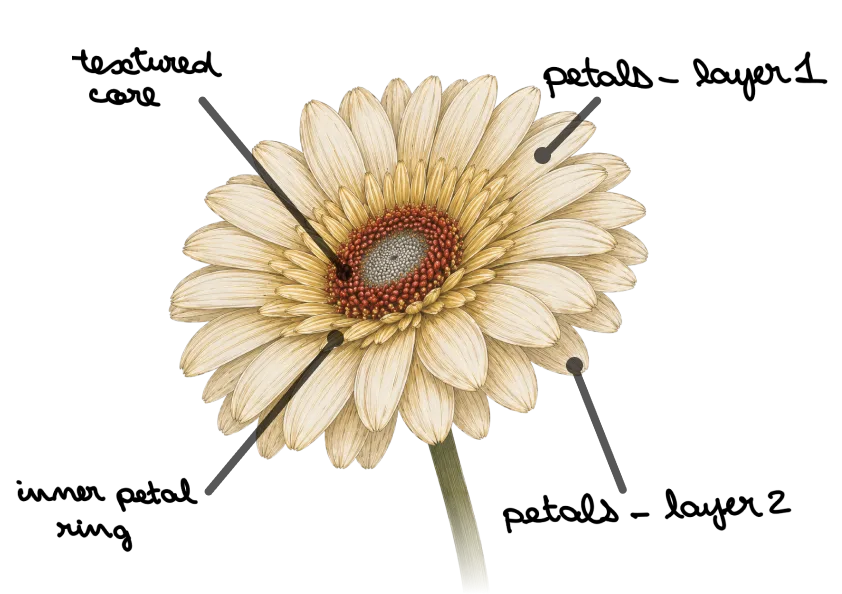
Its radial structure made it simple enough to study as mechanical logic, but rich enough to create a visually expressive piece. More importantly, its anatomy offered clear layers to translate: a dense central core, a ring of smaller inner petals, and larger outer petals that could become part of the kinetic movement.
This mattered because OLIA was never intended as a single decorative object. The goal was to develop a kinetic system that could eventually expand into other floral species, each with its own structure, proportions, and movement constraints.
The gerbera became the foundation: a first bloom used to test how floral morphology could be translated into a reproducible kinetic language.
The gerbera's radial structure offered a clear foundation for translating floral morphology into a kinetic pendant system.
Gerbera Anatomy as System Logic
02. Designing for Two States
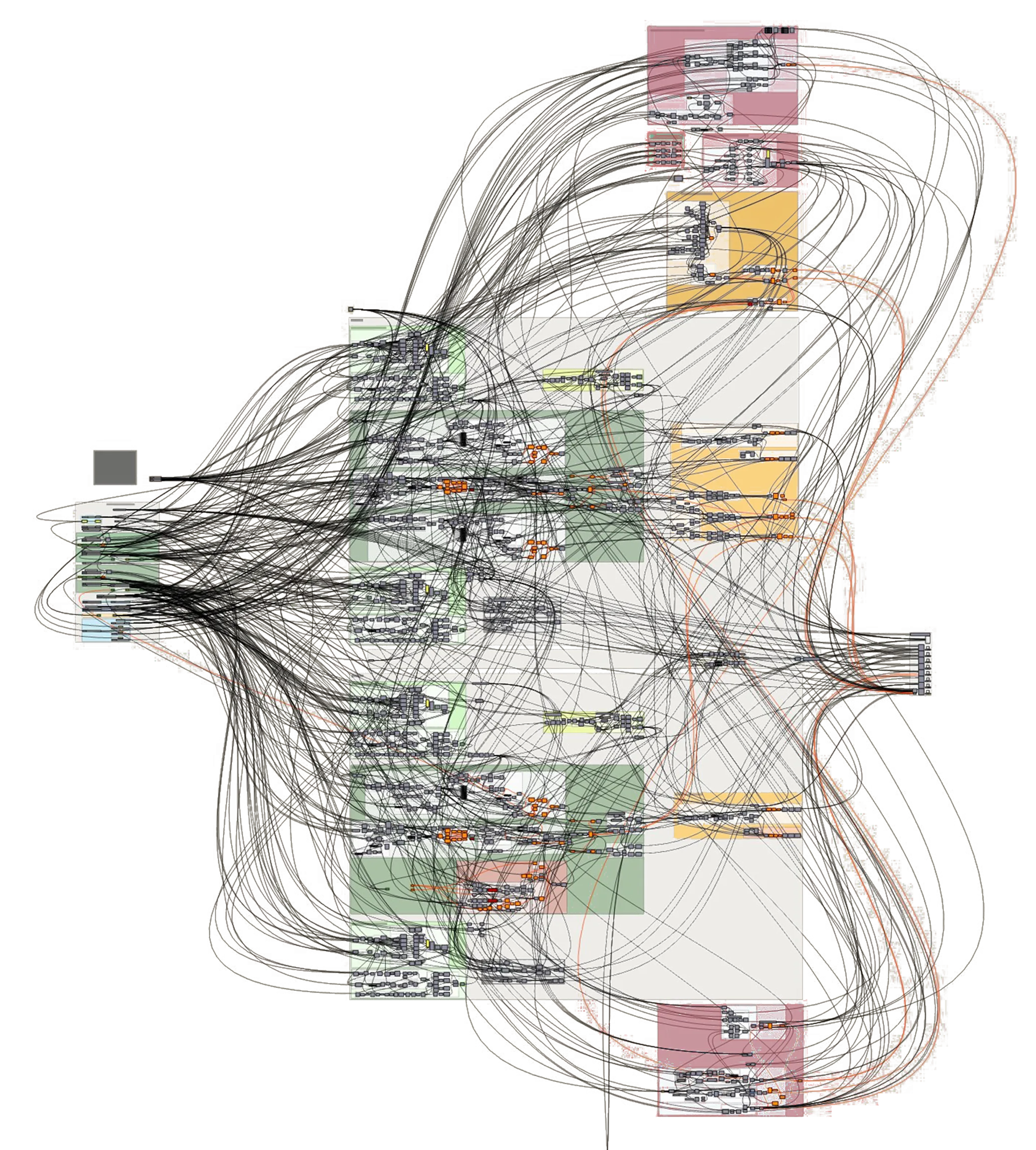
Design Logic in Grasshopper
The main challenge was not designing the flower in its open state. It was designing a form that could work beautifully in two opposite conditions: fully closed and fully open.
Every petal had to behave as both visual form and mechanical component. When closed, the piece needed to feel compact, contained, and intentional. When open, it needed to unfold into a balanced floral composition without awkward gaps, collisions, or visual heaviness.
This made the process less about modelling a final shape and more about controlling a transformation.
Parametric modelling became essential because it allowed both states to be studied at the same time. As the petals were shaped, scaled, and positioned, the system could be tested continuously against the open and closed configurations.
Rather than designing the bloom as a static object, the model became a way to negotiate relationships: petal count, layer count, scale, radial distribution, opening angle, and the visual balance between both states.
Each formal decision had to answer two questions:
Does it move correctly?
Does it still feel like a flower?
Parametric System Logic
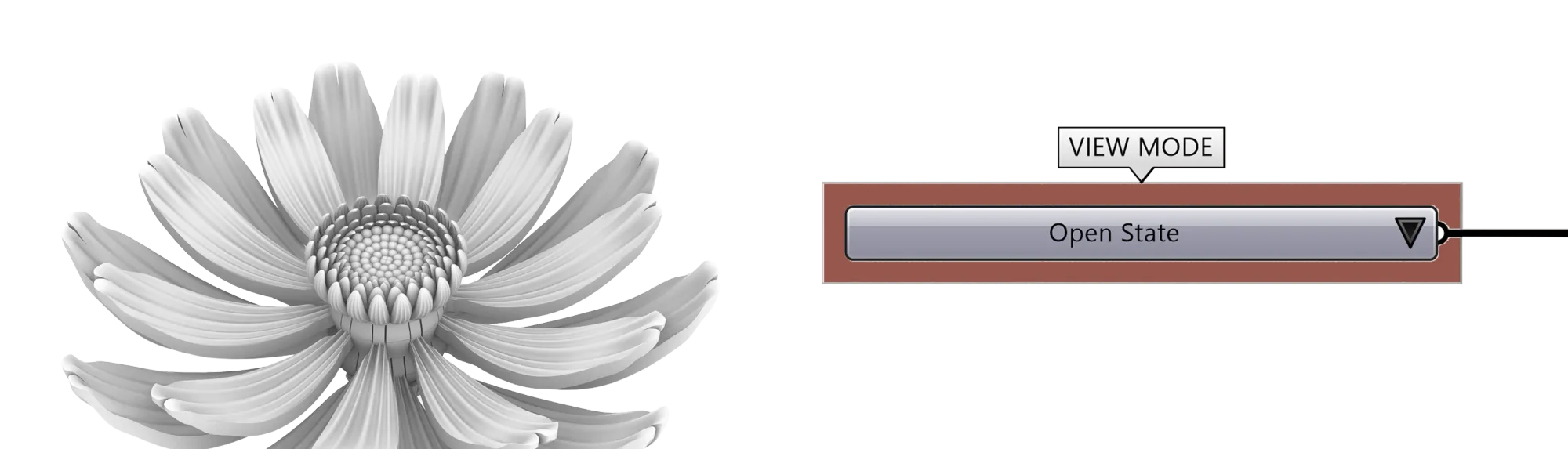
Open Bloom
The open state needed to feel full, balanced, and floral, without exposing awkward gaps between moving petals.
01
Closed Volume
The closed state was designed as a compact, intentional form rather than a collapsed version of the bloom.
02
Movement Constraints
The full parametric model allowed the open and closed states to be evaluated simultaneously, so every petal could be designed through movement rather than as a static form.
03
Parametric Controls
Key variables such as petal count, layer count, scale, and angle allowed the system to be adjusted without rebuilding the logic from scratch.
04
03. From One Layer to Two
The first version of the system used a single layer of kinetic petals.
It was mechanically simpler, but visually incomplete.
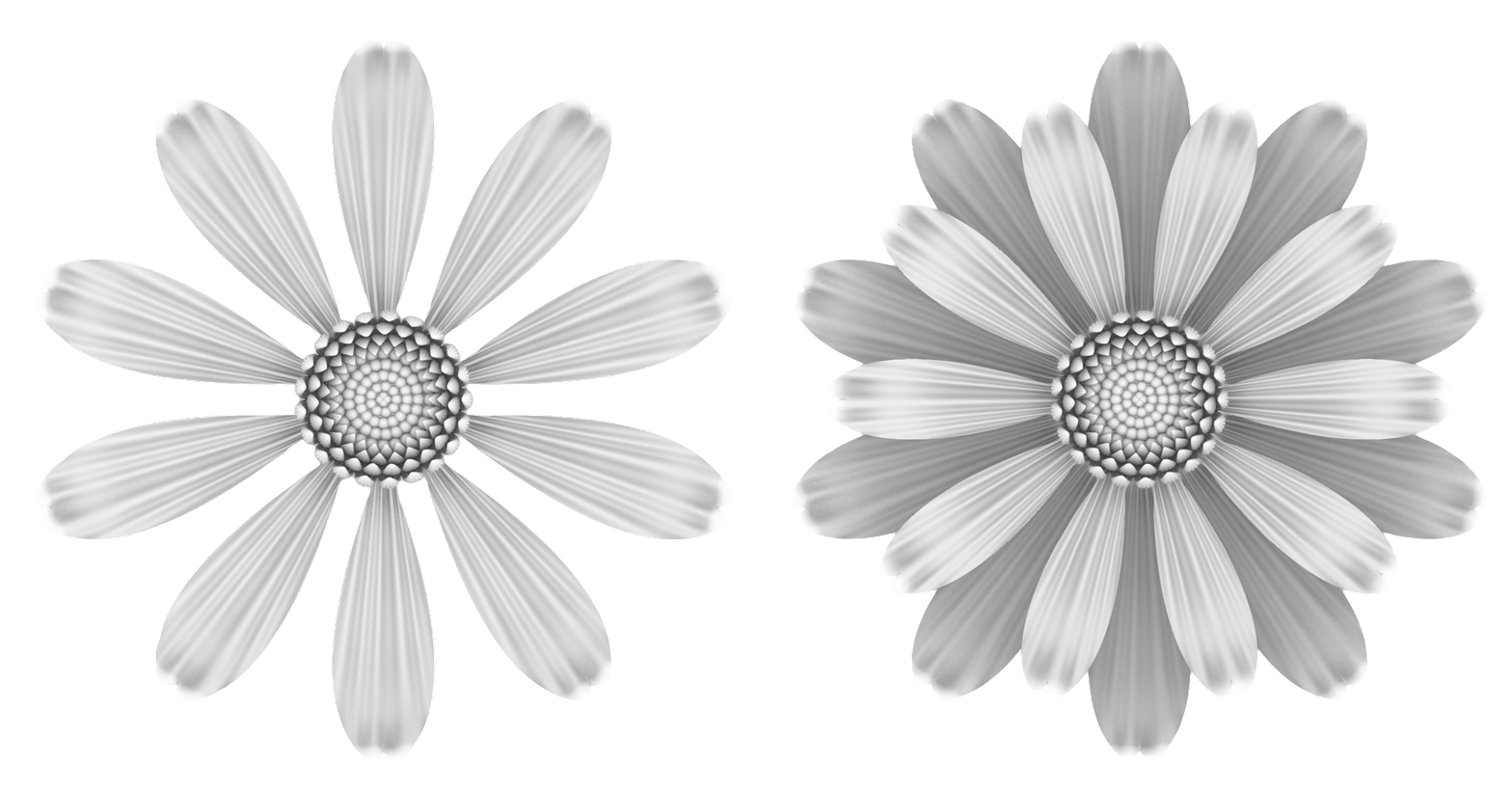
For the piece to close properly, the petals needed enough distance between them. In the closed state, that spacing worked. But once the flower opened, the same distance created visible gaps that made the bloom feel sparse and unresolved.
The system evolved into two kinetic layers.
A lower layer of larger petals created the main volume of the bloom, while a second layer of smaller petals filled the visual rhythm around the center. This added complexity, but it allowed the piece to close cleanly while creating a fuller and more continuous open state.
The decision was not about adding decoration.
It was about finding the right balance between movement, closure, and floral presence.
Layering as a Design Solution
THE OBJECT
Once the system was resolved digitally, the challenge became physical.
OLIA had to move, close, open, hold its form, preserve its finishes, and still feel like a refined piece of jewellery. At this scale, every decision became more delicate: proportions, tolerances, material thickness, assembly, and surface finishing all affected both the movement and the final appearance.
The piece was not only designed to look like a flower.
It was designed to behave like one.
01. Movement as Interaction
The interaction is intentionally simple: the pendant opens and closes through a discreet rotation of the stem.
That gesture turns the stem from a decorative element into the control point of the object. As it rotates, the petals shift from a compact closed volume into an open bloom, creating a small but deliberate moment of transformation.
The movement is not an added effect.
It is the experience of the piece.
02. Concealed Mechanics
The movement appears simple from the outside.
That simplicity depends on what remains hidden.
Behind the opening gesture, OLIA relies on a concealed mechanical logic that connects petal geometry, rotation, spacing, and alignment. Each petal needed to behave as part of a larger system, moving in relation to the others while preserving the visual language of the flower.
The goal was not to expose the mechanism.
It was to make the transformation feel natural.
For this reason, the internal structure was developed to support the bloom without competing with it. The mechanics needed to remain discreet, allowing the piece to be read first as a flower, then as an object in motion.
Movement Principle
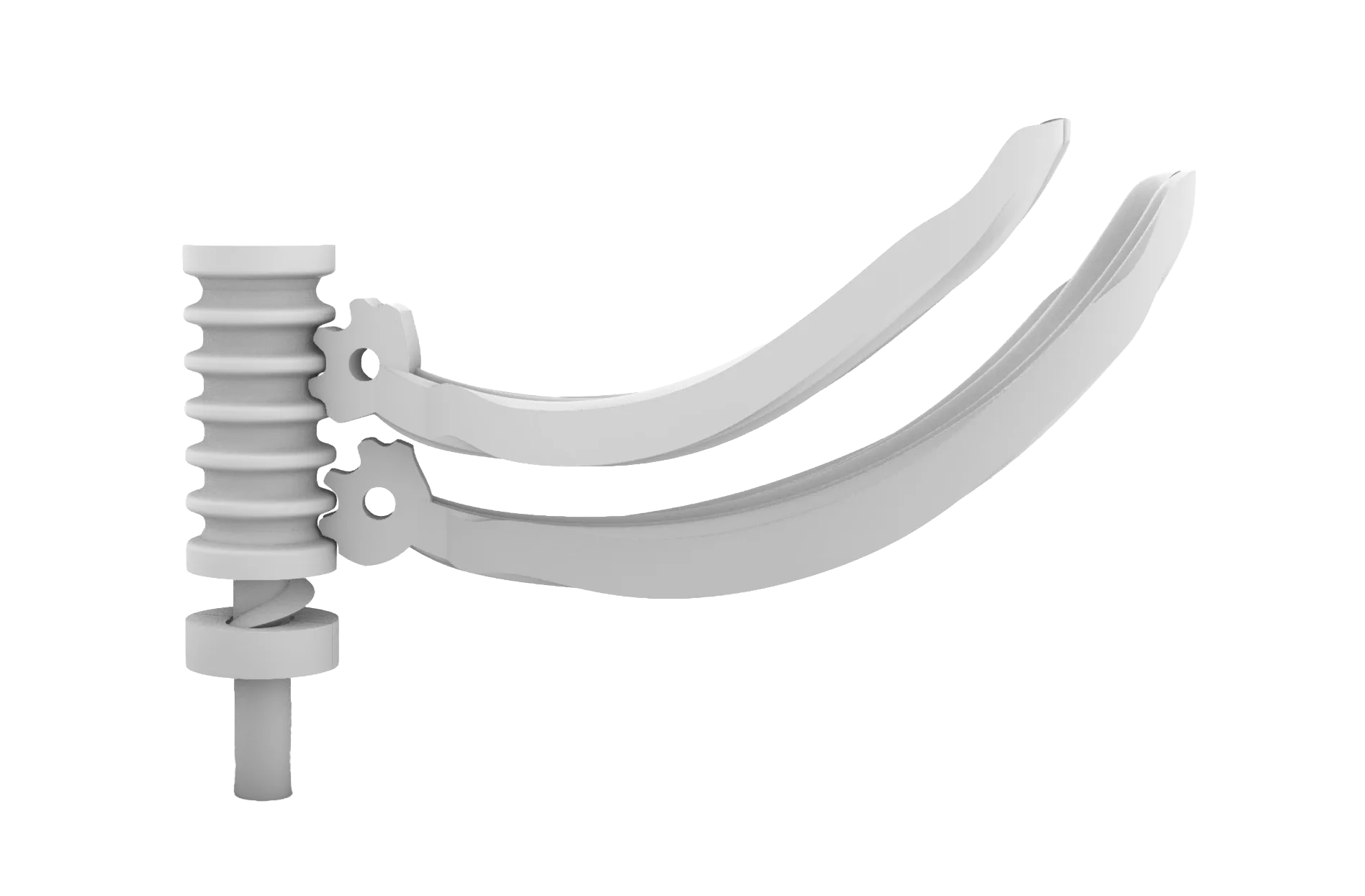
A System in Fragments
Selected visible components from a single pendant, revealing the scale of the system while keeping the full assembly undisclosed.
03. Jewellery-Scale Fabrication
Resolving the system digitally was only part of the project.
The piece still had to become a physical object: small enough to be worn, precise enough to move, and refined enough to feel like jewellery rather than a prototype.
At this scale, fabrication became one of the most demanding parts of the process. Every component had to be designed with material behaviour, casting limitations, surface finishing, plating, assembly, and movement in mind.
The challenge was not only whether the form could be produced.
It was whether it could be produced without compromising the mechanism.
The final process combined digital fabrication with traditional jewellery techniques, moving from wax printing and casting to finishing, plating, and a highly controlled assembly strategy. Several internal details have been intentionally simplified in this case study to focus on the visible design logic, fabrication constraints, and final behaviour of the piece.
The result is an object that carries the complexity of its production quietly.
It moves, but it does not look mechanical.
Fabrication Process
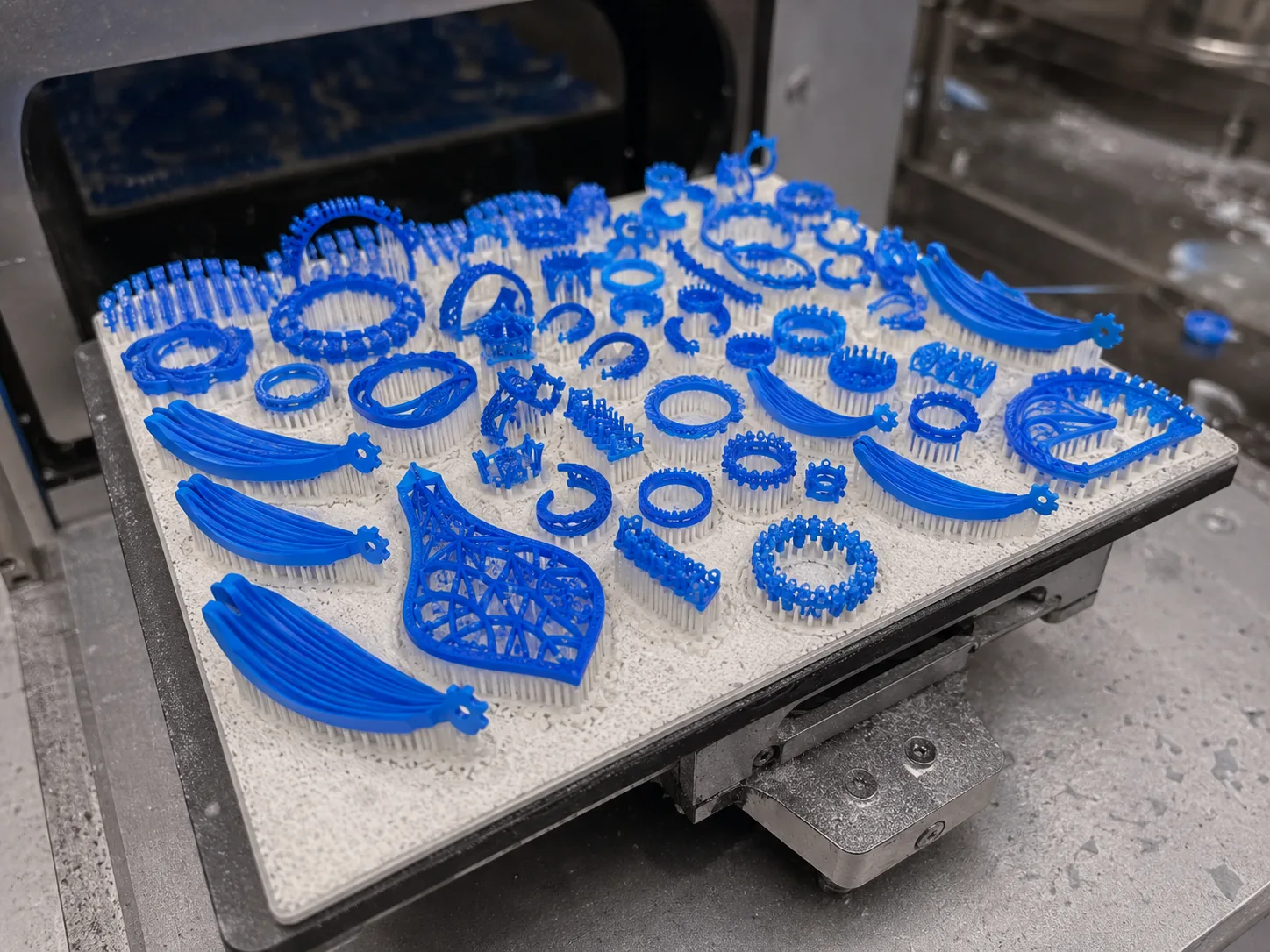
Wax Print
Digital components were printed in wax, using dissolvable support material to preserve delicate geometries.
01
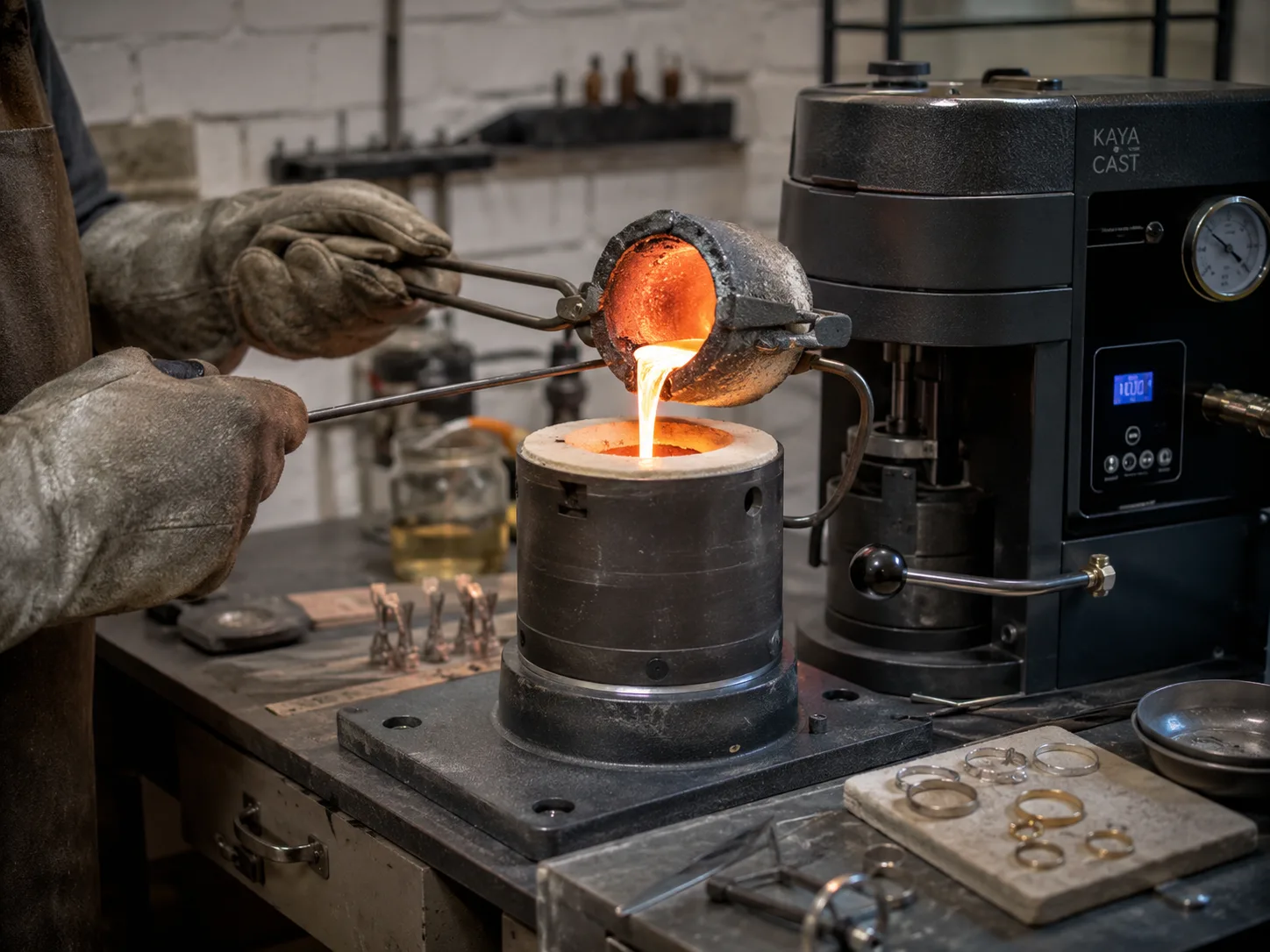
Casting
Wax components were arranged into casting trees before the system moved from prototype logic into precious metal.
02
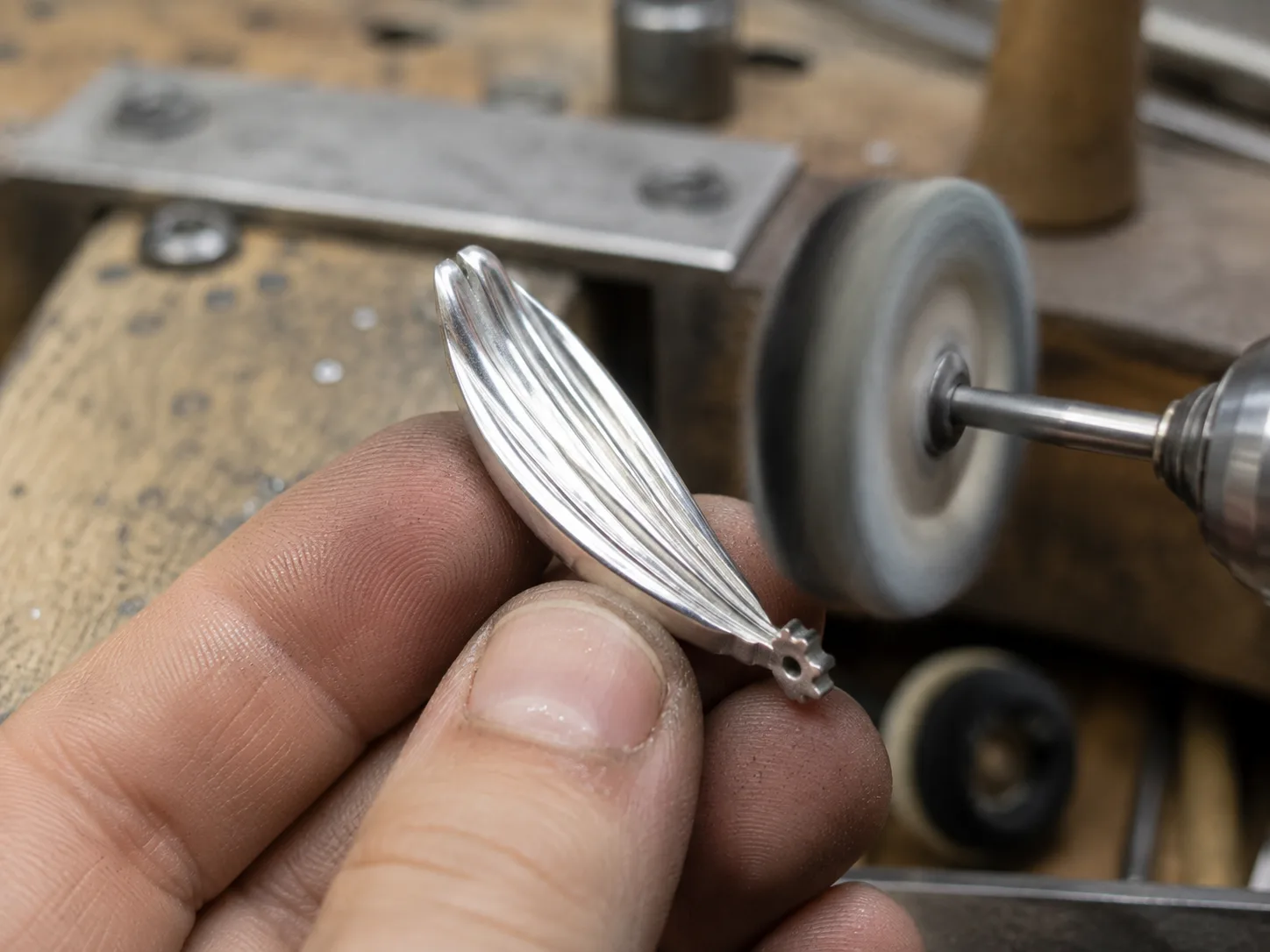
Finishing
Components were refined through tumbling and motor polishing before plating and final assembly.
03
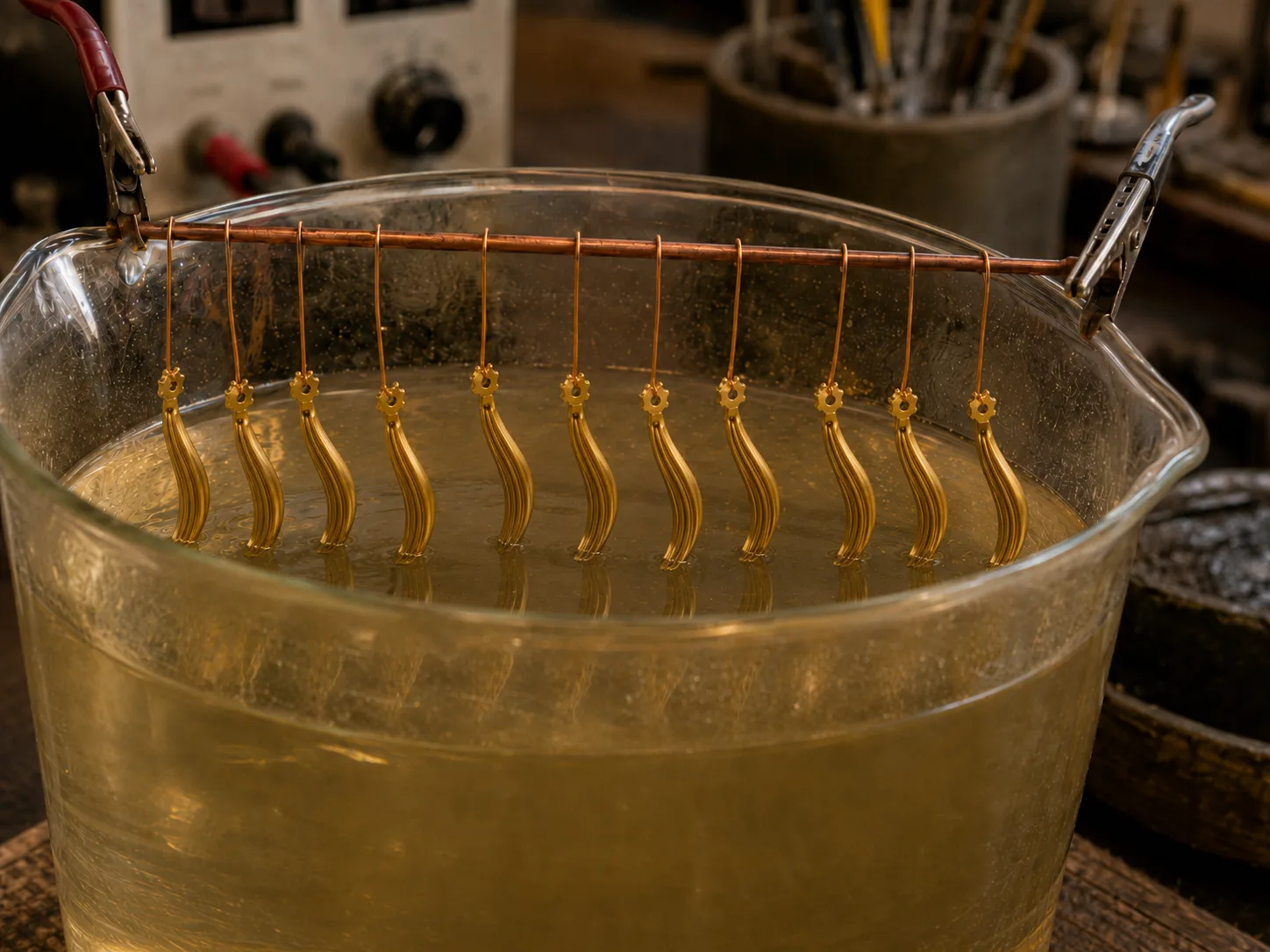
Electroplating
Gold was selectively applied to the petals, creating contrast, depth, and reflection against the silver structure.
04
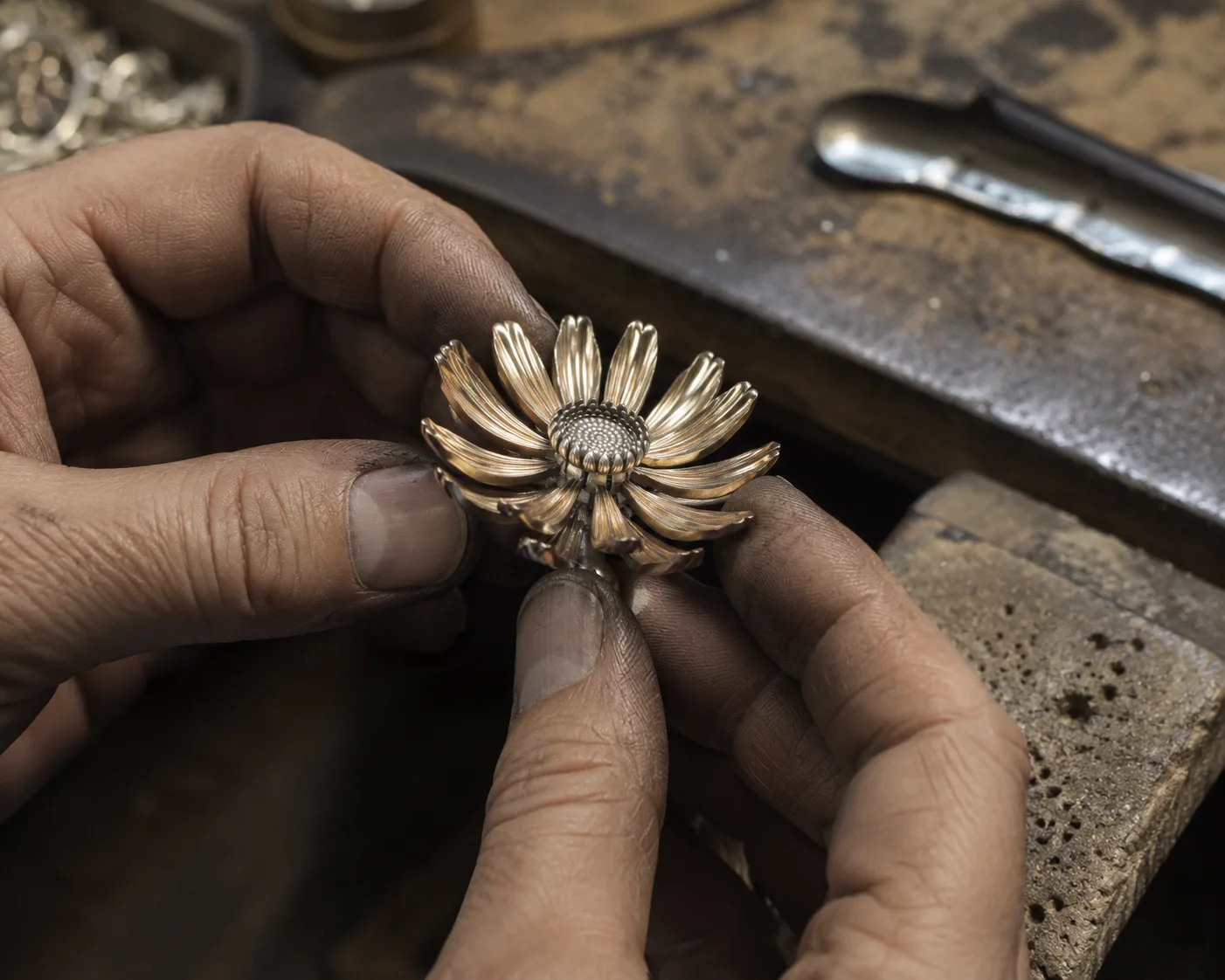
Precision Assembly
Finished components were joined through a controlled process designed to preserve movement and surface quality.
05
04. Light, Reflection, and Finish
The final piece brings the system back into the language of jewellery.
After the geometry, movement, fabrication, and assembly were resolved, the object still needed to feel refined, precious, and intentional. The mechanism could not dominate the experience. It had to disappear into the form, allowing the piece to be perceived first through light, reflection, material, and movement.
The contrast between silver and gold was used to amplify the transformation. As the pendant opens, the gold-plated petals catch the light differently from the silver structure, creating a shifting visual effect between the closed and open states.
The result is a piece that feels both mechanical and organic.
A small kinetic system disguised as a delicate object.
Final Piece
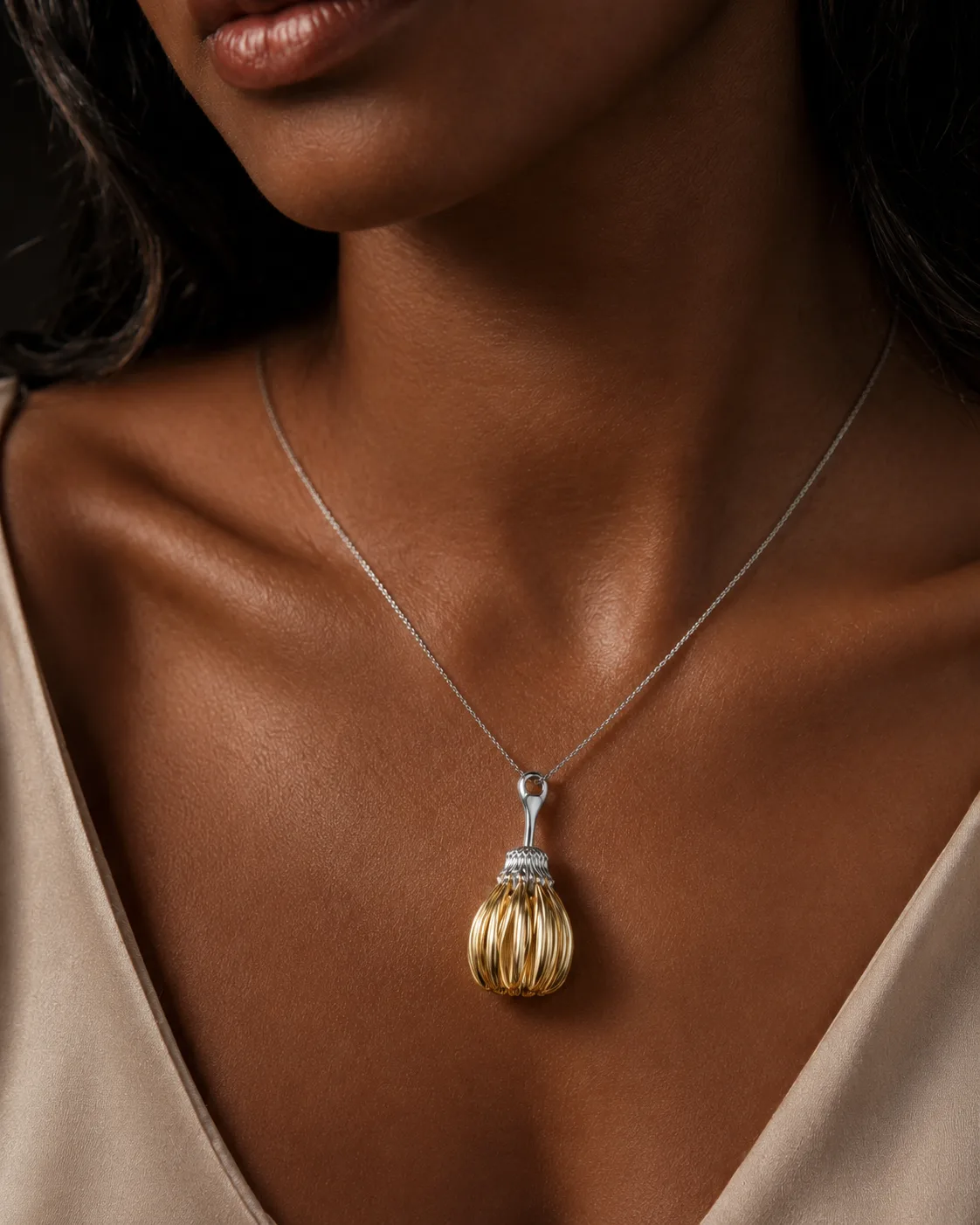
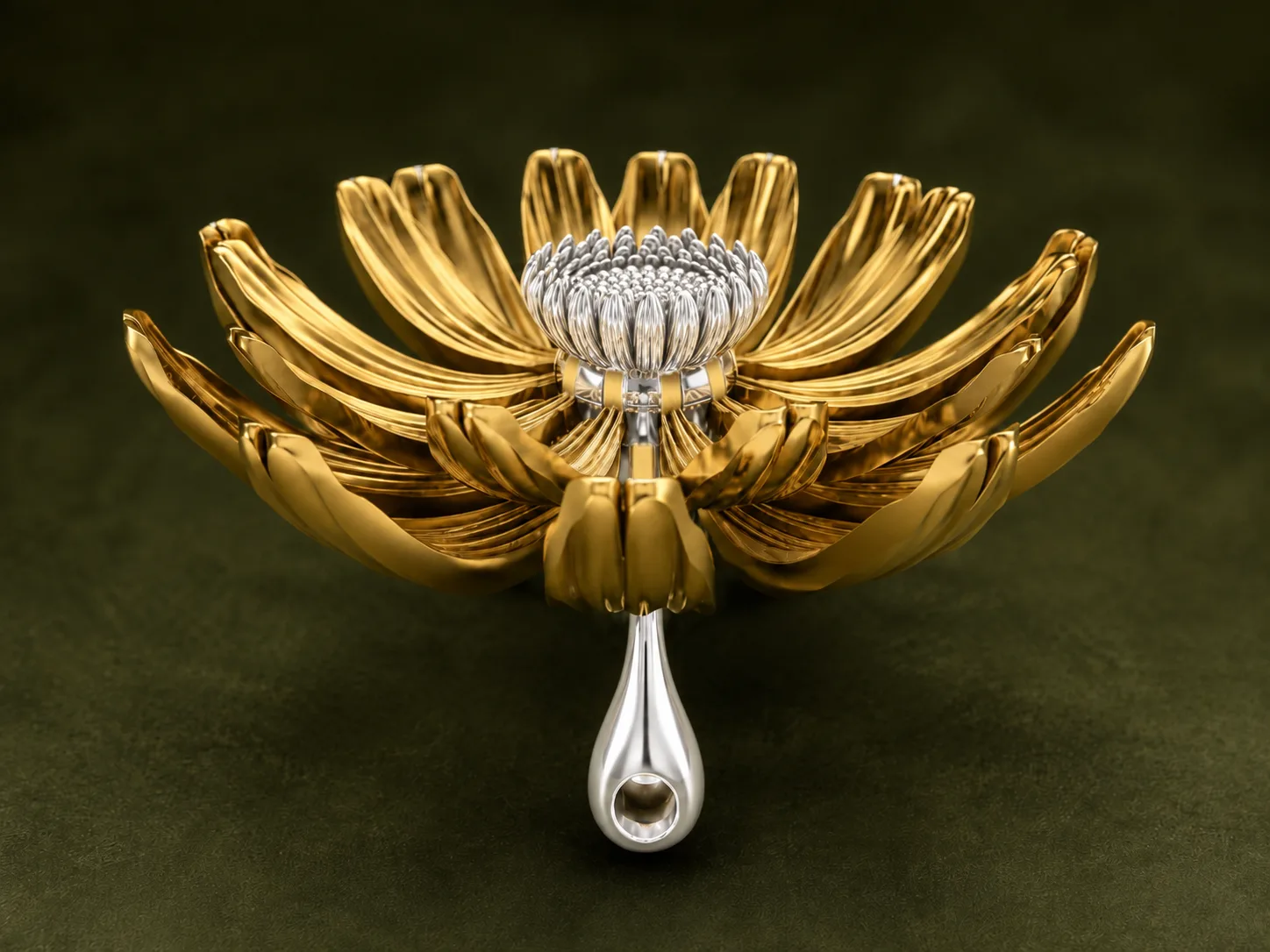
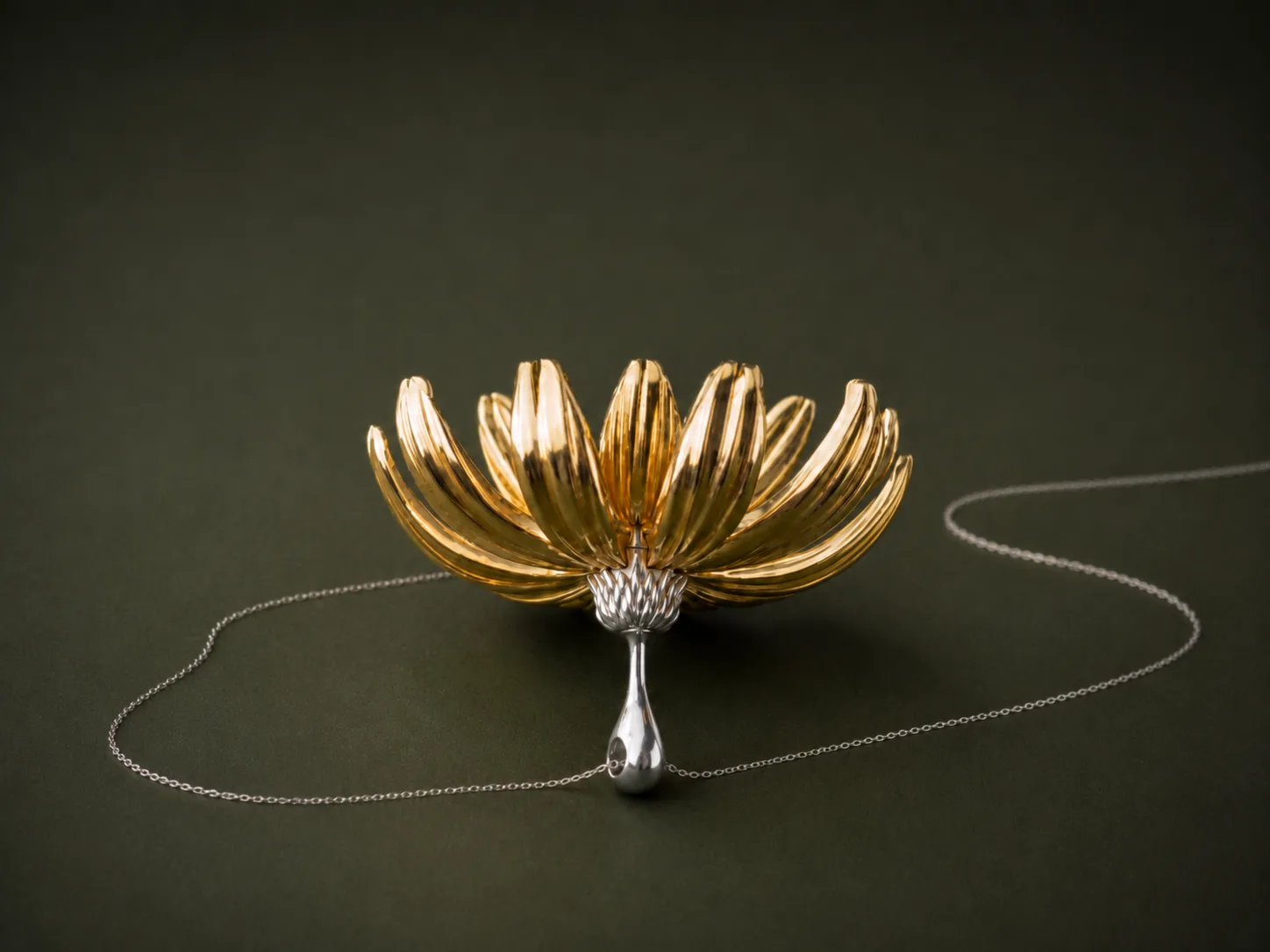
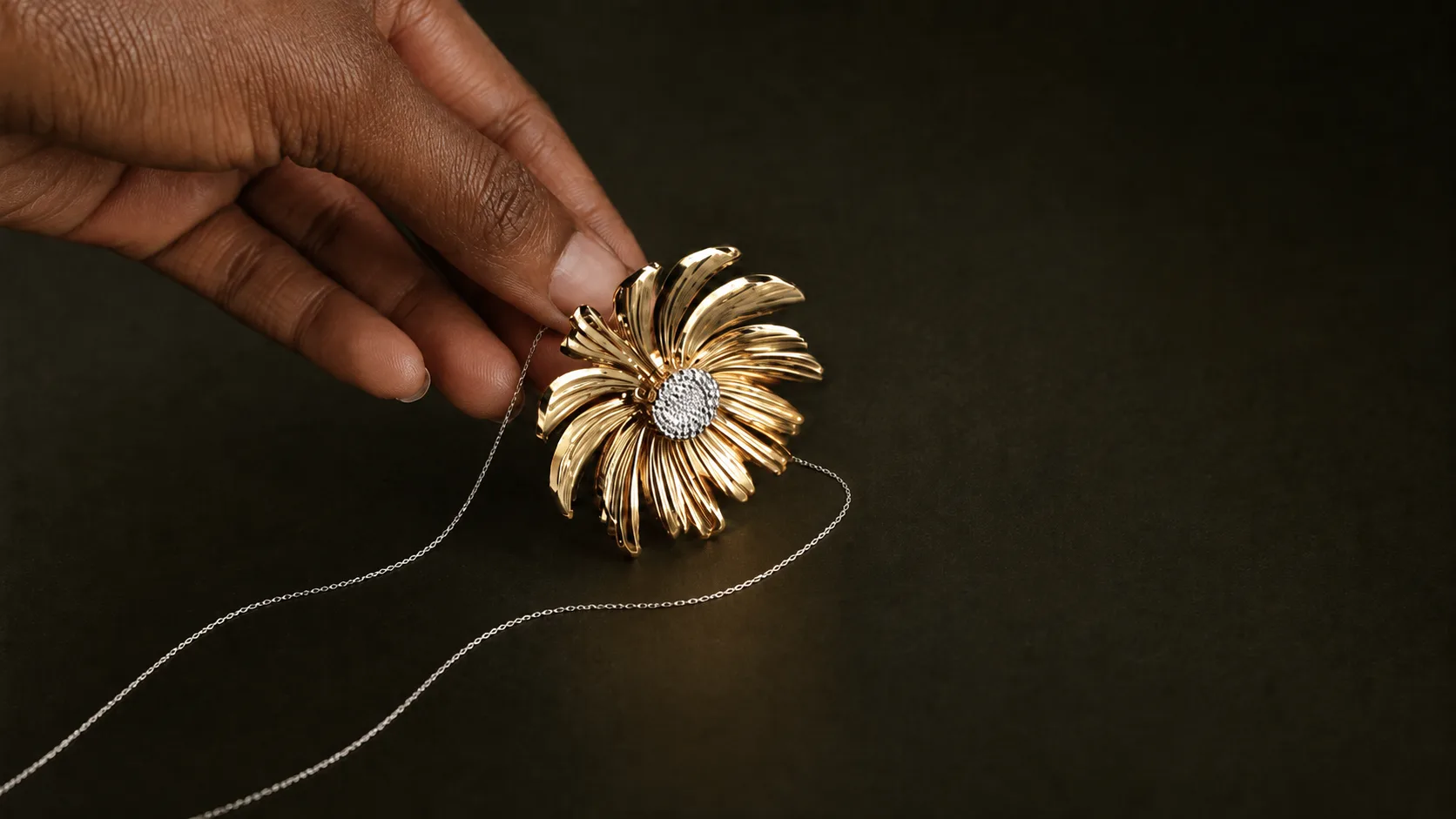
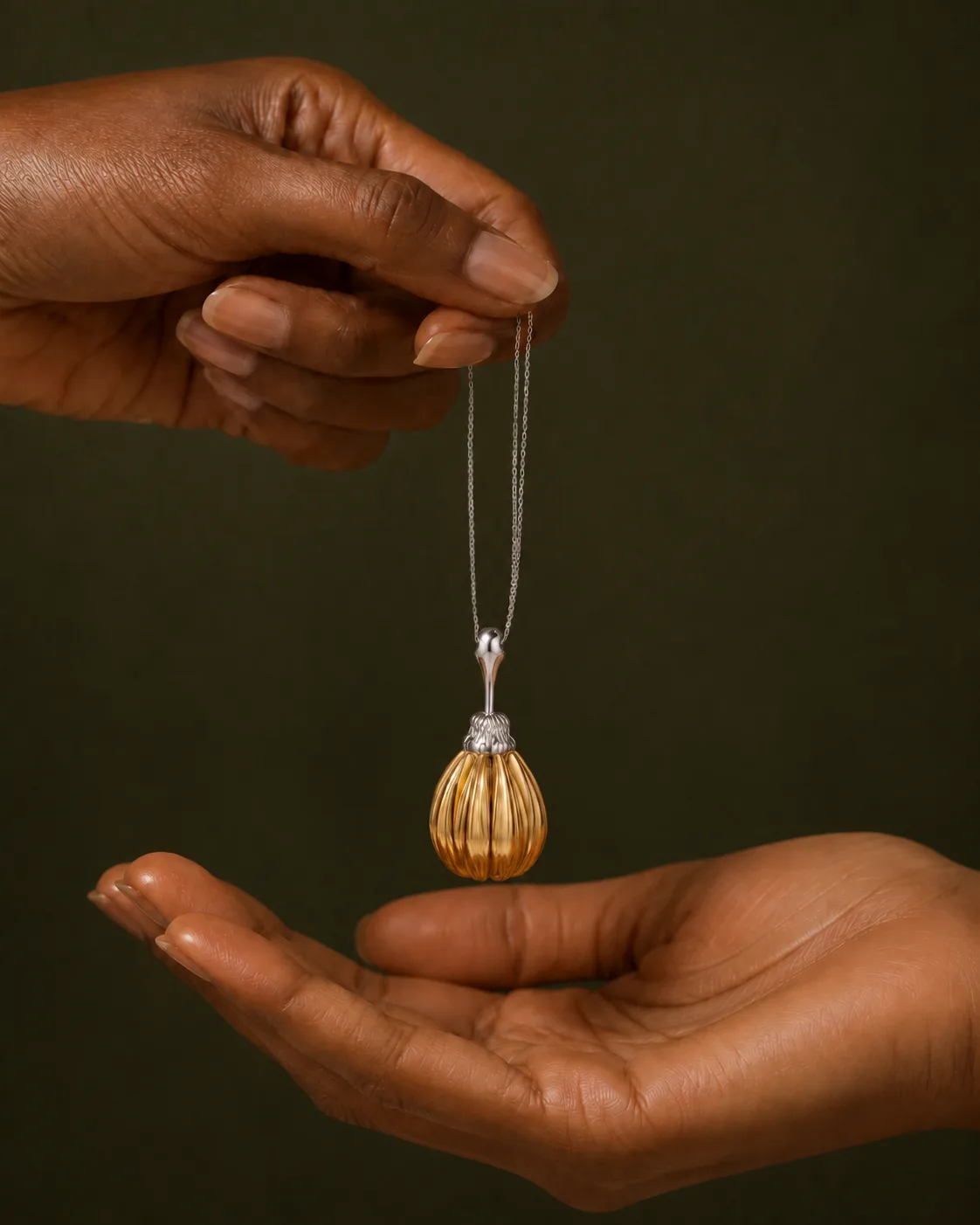
In its final form, OLIA is not read as a mechanism first. It is read as a flower, a jewel, and a small moment of transformation.
Reflection
OLIA taught me that movement is never only a formal decision.
At jewellery scale, every gesture affects the entire system: how the piece opens, how it closes, how it is fabricated, and how it is experienced.
The project challenged me to design across two states at once, using the digital model not only to visualize the object, but to test relationships between geometry, movement, material, and process.
The gerbera became the first expression of that system, but not the end of it. The same logic can continue evolving into other floral structures, where the balance between natural form and mechanical constraint becomes even more complex.
More than a finished pendant, OLIA became a way of understanding how computation can extend craft: not by removing the hand, but by making more complex forms of making possible.